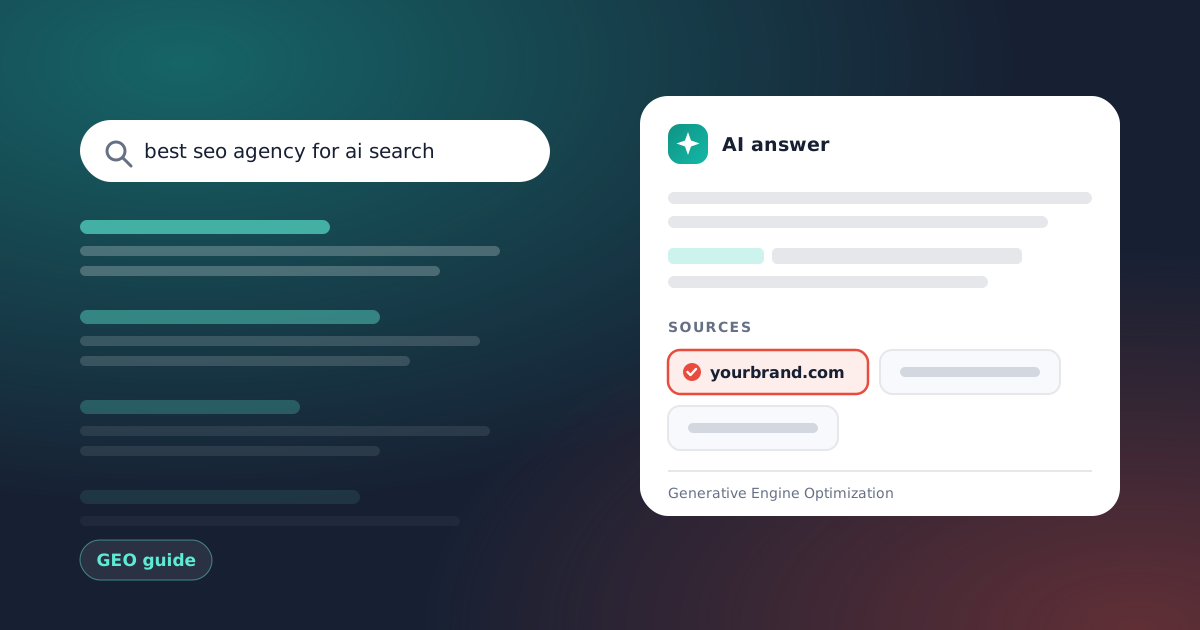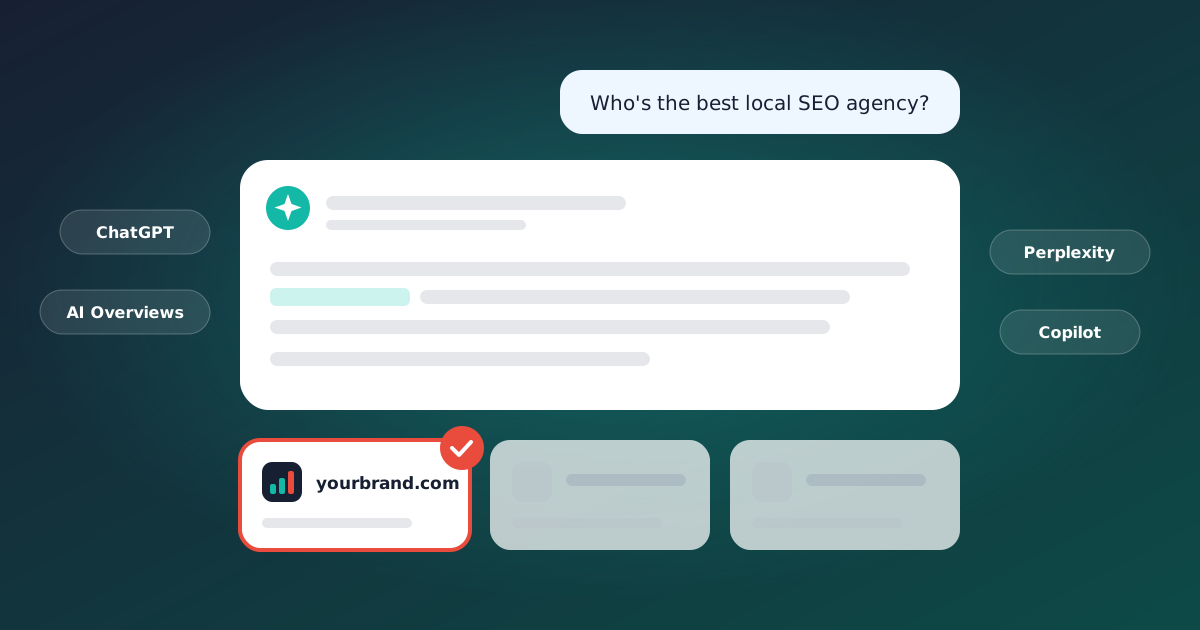
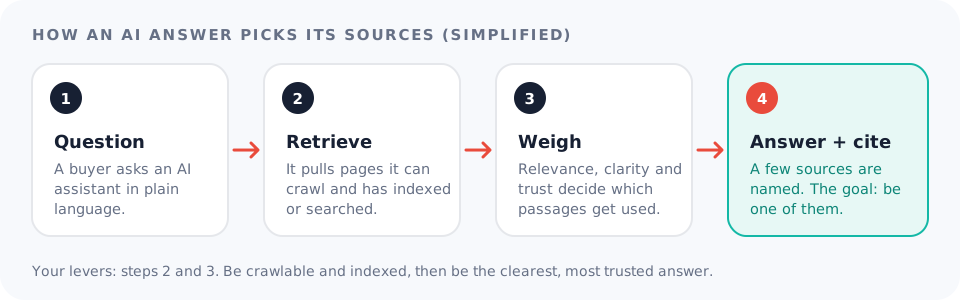
When an AI assistant answers a buyer's question, it usually names only a few sources. That's a much smaller shelf than a page of search results — and a much bigger prize if you're on it.
There's no switch that guarantees a citation. Google, OpenAI and others decide what to show, and their systems keep changing. But the businesses that get cited consistently tend to do the same seven things well.
1. Make sure you can be found at all
AI answers are built from pages the system can retrieve. For Google's AI Overviews, that means normal Google Search eligibility: the page must be indexed and allowed to show a snippet. Google has said there's no special markup required beyond standard SEO best practice.
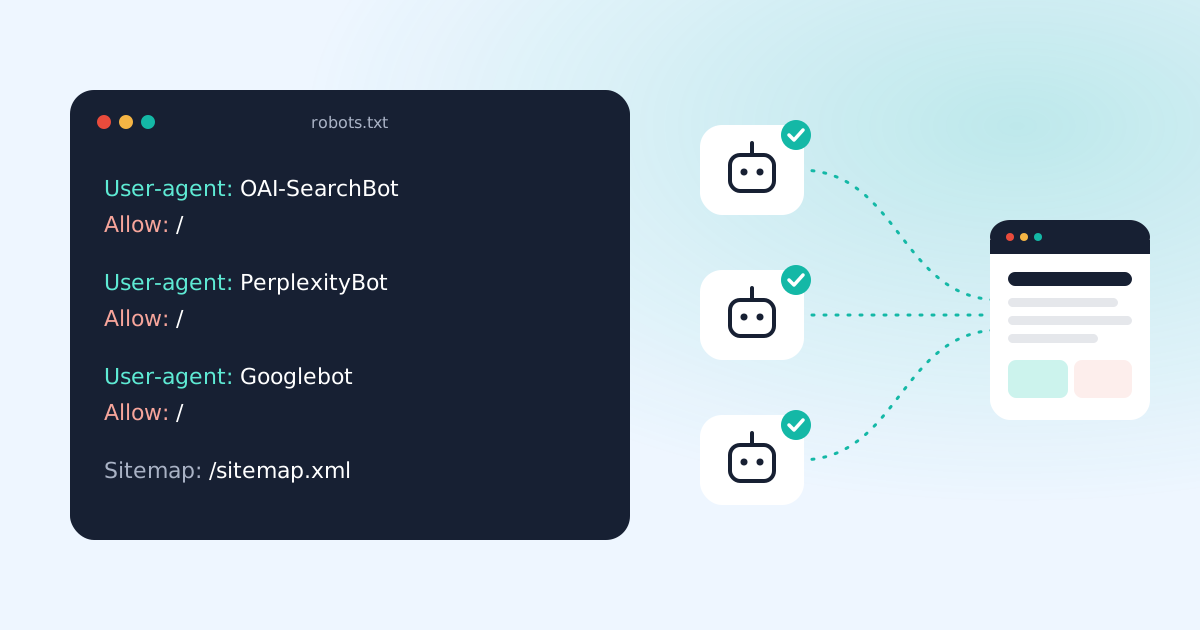
ChatGPT's search features rely on OpenAI's own crawler, OAI-SearchBot, alongside third-party search providers — Bing among them. Being blocked in robots.txt, or missing from Bing's index, can quietly keep you out.
Do this: check robots.txt for blocked crawlers, confirm your key pages are indexed in Google Search Console and Bing Webmaster Tools, and make sure you're not hiding content behind nosnippet rules you forgot about.
2. Answer the question in the first two sentences
AI systems lift passages, not whole pages. A page that opens with the answer — then backs it up — is far easier to quote than one that warms up for three paragraphs.
- Put a direct, one- or two-sentence answer right under each heading.
- Use the words buyers actually use in the question.
- Follow with specifics: steps, prices, ranges, timelines, conditions.
3. Write in quotable, self-contained chunks
Each section should make sense if it's the only thing someone reads. Short paragraphs, descriptive subheadings, lists for steps and tables for comparisons all make it easier for a model to pull out an accurate, attributable snippet.
Key takeaway: A good test: could someone paste this paragraph into a chat with no context and still understand it? If yes, it's quotable.
4. Make your brand unmistakable
AI systems need to be confident about who you are before they recommend you. Inconsistent names, addresses or service descriptions create doubt.
- Keep your name, address, phone and service list identical across your site, Google Business Profile, directories and social profiles.
- Add Organization (and, for local businesses, LocalBusiness) structured data.
- Have a clear About page that states what you do, for whom, and where.
5. Earn independent mentions
Answer engines are more likely to recommend a business that other credible sources also talk about. Reviews, local press, industry roundups, supplier and partner pages, and genuine community involvement all count — even when they don't include a link.
Avoid shortcuts. Paid link schemes and fake reviews are against Google's policies and erode the very trust you're trying to build.
6. Keep facts current and specific
Outdated hours, old prices or vague claims make you a riskier source to cite. Date your content, review key pages regularly, and replace "we offer competitive pricing" with real ranges and real conditions wherever you can.
7. Track citations, not just rankings
Pick a fixed set of 20–30 buyer questions. Every month, ask them in ChatGPT, Perplexity, Gemini and Google, and record:
| Track this | Why it matters |
|---|---|
| Mentioned | Your brand appears in the answer text |
| Cited | Your page is listed as a source |
| Recommended | You're named as a top choice |
| Competitors | Who wins the prompts you don't |
That gives you an honest baseline — and shows which pages and topics to improve next.
Quick recap
- Be crawlable and indexed — on Google and Bing.
- Lead with the answer.
- Write self-contained, quotable sections.
- Make your brand consistent everywhere.
- Earn genuine third-party mentions.
- Keep facts fresh and specific.
- Measure mentions and citations every month.